Delving into Unity Temple by Frank Lloyd Wright: Architectural Highlights, this introduction immerses readers in a unique and compelling narrative. The architectural style, building materials, interior design, symbolism, and significance of Unity Temple will be explored in detail, shedding light on the genius of Frank Lloyd Wright's work.
Architectural Style
Unity Temple by Frank Lloyd Wright is a prime example of the Prairie School architectural style, which emerged in the early 20th century in the United States. This style is known for its horizontal lines, low-pitched roofs, overhanging eaves, and integration with the surrounding landscape.
Key Features
- Horizontal Emphasis: Unity Temple features strong horizontal lines that emphasize the building's unity with the earth.
- Flat Roofs: The building's flat roofs with deep overhangs create a sense of shelter and protection.
- Geometric Shapes: Wright's use of geometric shapes, such as squares and rectangles, can be seen throughout Unity Temple.
- Open Floor Plan: The open floor plan of the interior spaces promotes a sense of flow and connectivity.
- Stained Glass Windows: The building's stained glass windows add a touch of color and light, enhancing the overall aesthetic.
Reflection of Frank Lloyd Wright's Design Principles
Unity Temple embodies Frank Lloyd Wright's design principles of organic architecture, which seeks harmony between human habitation and the natural world. The integration of the building with its environment, the use of natural materials like brick and concrete, and the emphasis on horizontal lines all reflect Wright's belief in creating architecture that is in tune with its surroundings.
Additionally, the open floor plan and emphasis on natural light showcase Wright's commitment to creating spaces that are both functional and beautiful.
Building Materials
The primary building materials used in the construction of Unity Temple include reinforced concrete, brick, and art glass.Reinforced concrete was a groundbreaking choice by Frank Lloyd Wright, as it allowed for the creation of long, uninterrupted horizontal and vertical lines that define the building's unique design.
The use of concrete also allowed for the creation of cantilevered roofs and overhangs, giving the temple a sense of weightlessness and openness.Brick was used for the exterior walls of Unity Temple, adding a warm and earthy texture to the building.
The brickwork also serves as a contrast to the smooth concrete surfaces, creating a visually striking appearance.Art glass was utilized for the windows of Unity Temple, allowing natural light to filter into the interior spaces while maintaining privacy. The colorful and geometric patterns of the art glass add a touch of elegance and spirituality to the building's overall aesthetic.
Durability and Sustainability
The materials used in the construction of Unity Temple were chosen not only for their aesthetic qualities but also for their durability and sustainability. Reinforced concrete is known for its strength and longevity, ensuring that the temple will stand the test of time.
Additionally, the use of concrete and brick reduces the need for frequent maintenance and repairs, contributing to the building's sustainability.The art glass windows of Unity Temple are not only beautiful but also energy-efficient. The colored glass filters light in a way that reduces the need for artificial lighting during the day, helping to lower energy consumption and make the building more environmentally friendly.
Interior Design
Unity Temple's interior design is characterized by its simplicity, functionality, and use of natural elements. Frank Lloyd Wright's innovative approach to space and light can be seen throughout the building, creating a harmonious and serene environment for worship and contemplation
Natural Light
One of the most striking features of Unity Temple's interior is the use of natural light. Wright incorporated skylights, clerestory windows, and translucent art glass to allow soft, diffused light to filter into the space. This not only creates a warm and inviting atmosphere but also highlights the geometric patterns and textures of the building materials.
Spatial Organization and Layout
The interior of Unity Temple is organized around a central worship space, which is surrounded by smaller rooms for meetings, offices, and social gatherings. Wright's use of open floor plans, low ceilings, and built-in furniture enhances the sense of unity and community within the building.
The spatial layout encourages interaction and connectivity among worshippers, fostering a sense of belonging and shared experience.
Symbolism and Significance
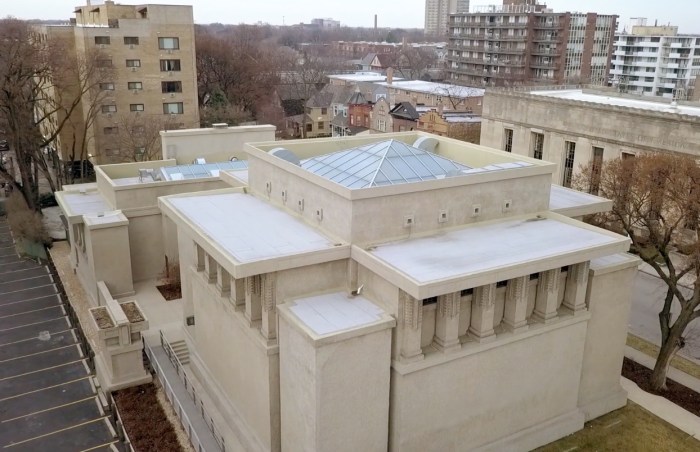
Unity Temple, designed by Frank Lloyd Wright, incorporates several symbolic elements that reflect his innovative architectural vision. The building's flat roof and horizontal lines symbolize the unity between the earth and the sky, while the use of natural materials like concrete and wood connects the structure to its surroundings.
Historical and Cultural Significance
Unity Temple holds great historical and cultural significance in architectural history as one of Frank Lloyd Wright's earliest works. Completed in 1908, it is considered a masterpiece of modern architecture and a pioneering example of the Prairie School style. The temple's innovative design, with its emphasis on geometric forms and open spaces, challenged traditional architectural norms of the time.
Influence on Subsequent Architectural Movements
Unity Temple's design has had a lasting impact on subsequent architectural movements and designs. Its use of exposed concrete and emphasis on natural light and open spaces influenced the development of modernist architecture. The building's integration with its natural surroundings and focus on functionality over ornamentation laid the groundwork for the minimalist movement in architecture.
Unity Temple continues to inspire architects and designers to this day with its revolutionary approach to space and form.
Final Conclusion
In conclusion, Unity Temple stands as a testament to Frank Lloyd Wright's innovative architectural vision. Its design elements, materials, and historical significance all contribute to its enduring legacy in the world of architecture. Exploring Unity Temple by Frank Lloyd Wright unveils a masterpiece that continues to inspire and influence architectural thought and practice.
Essential FAQs
What materials were used in constructing Unity Temple?
Unity Temple was primarily constructed using reinforced concrete and brick, showcasing Wright's innovative use of materials.
How does the interior design of Unity Temple utilize natural light?
The interior design of Unity Temple incorporates skylights and stained glass windows to let in natural light, creating a serene and harmonious ambiance within the space.
What symbolic elements are present in the design of Unity Temple?
Unity Temple incorporates geometric patterns and abstract forms symbolizing unity and harmony, reflecting Wright's philosophy of organic architecture.